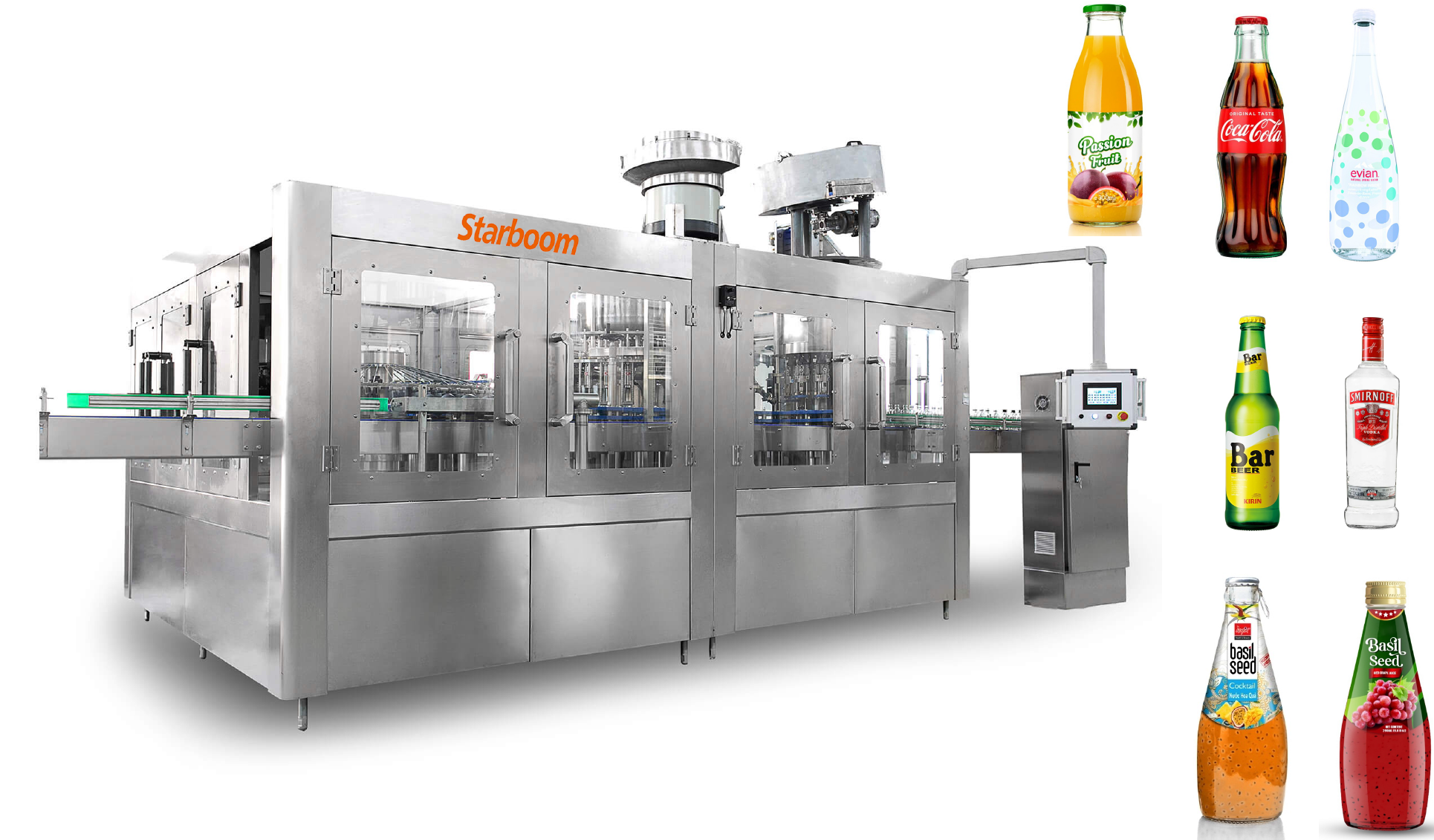
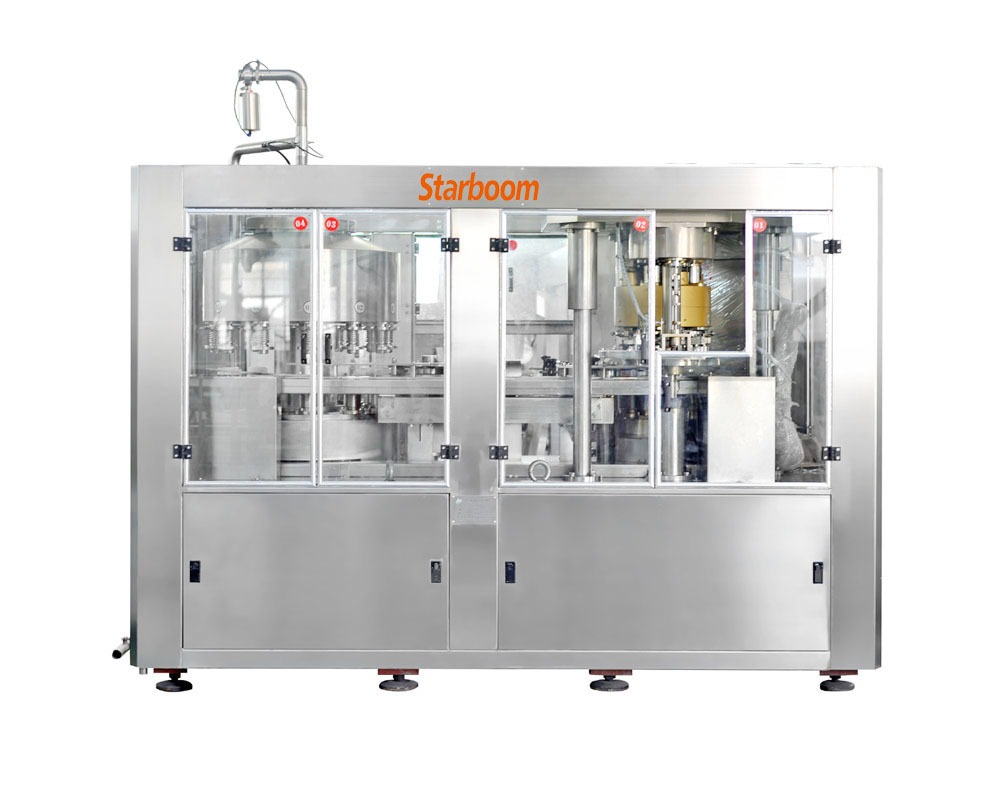
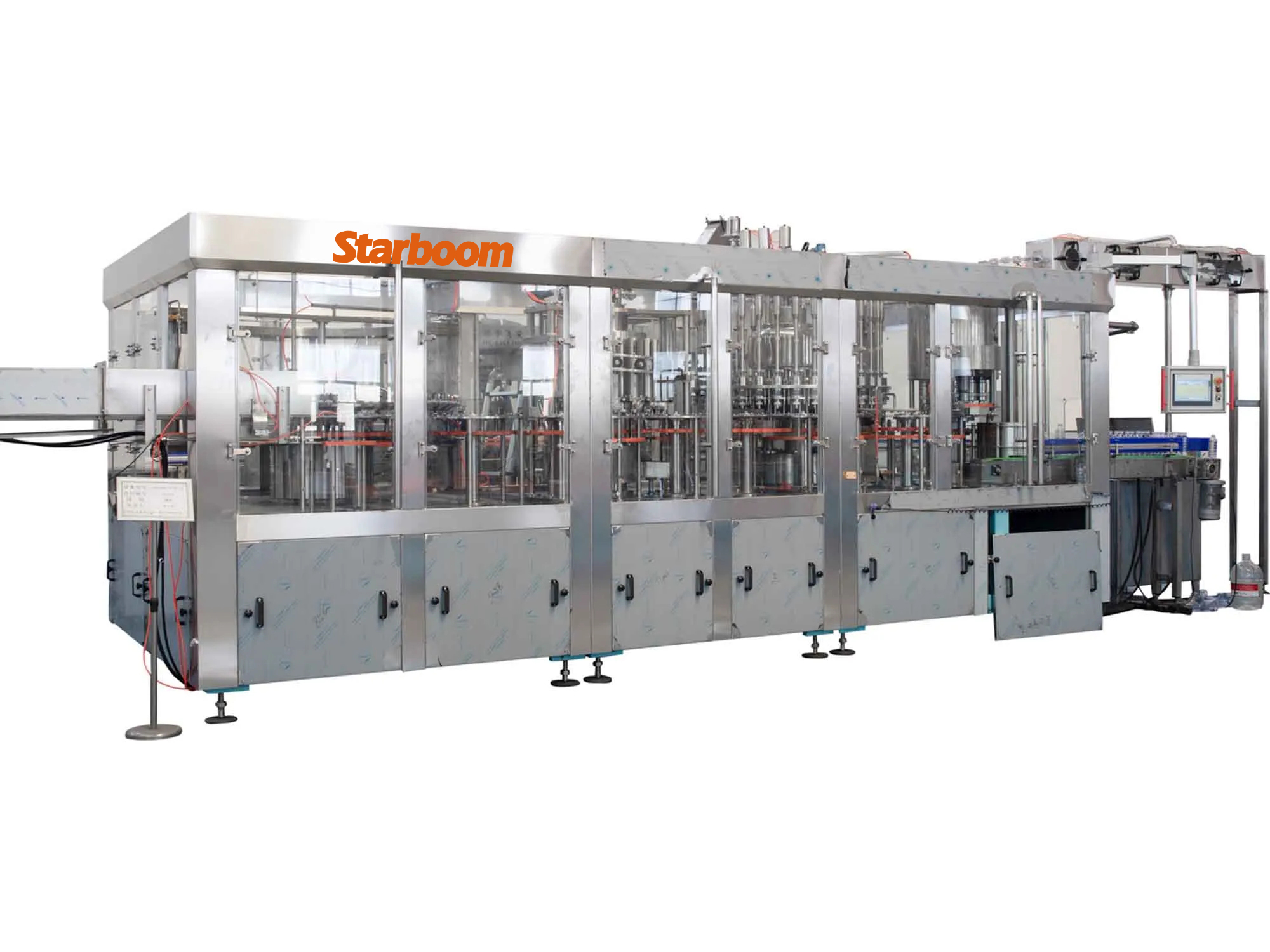
Starboom maquinaria inteligente, Lda., Enchimento por sopro e tampagem Combi-bloco & Máquinas de sopro de garrafas & Máquinas de enchimento de garrafas & Máquinas de embalagem de garrafas-
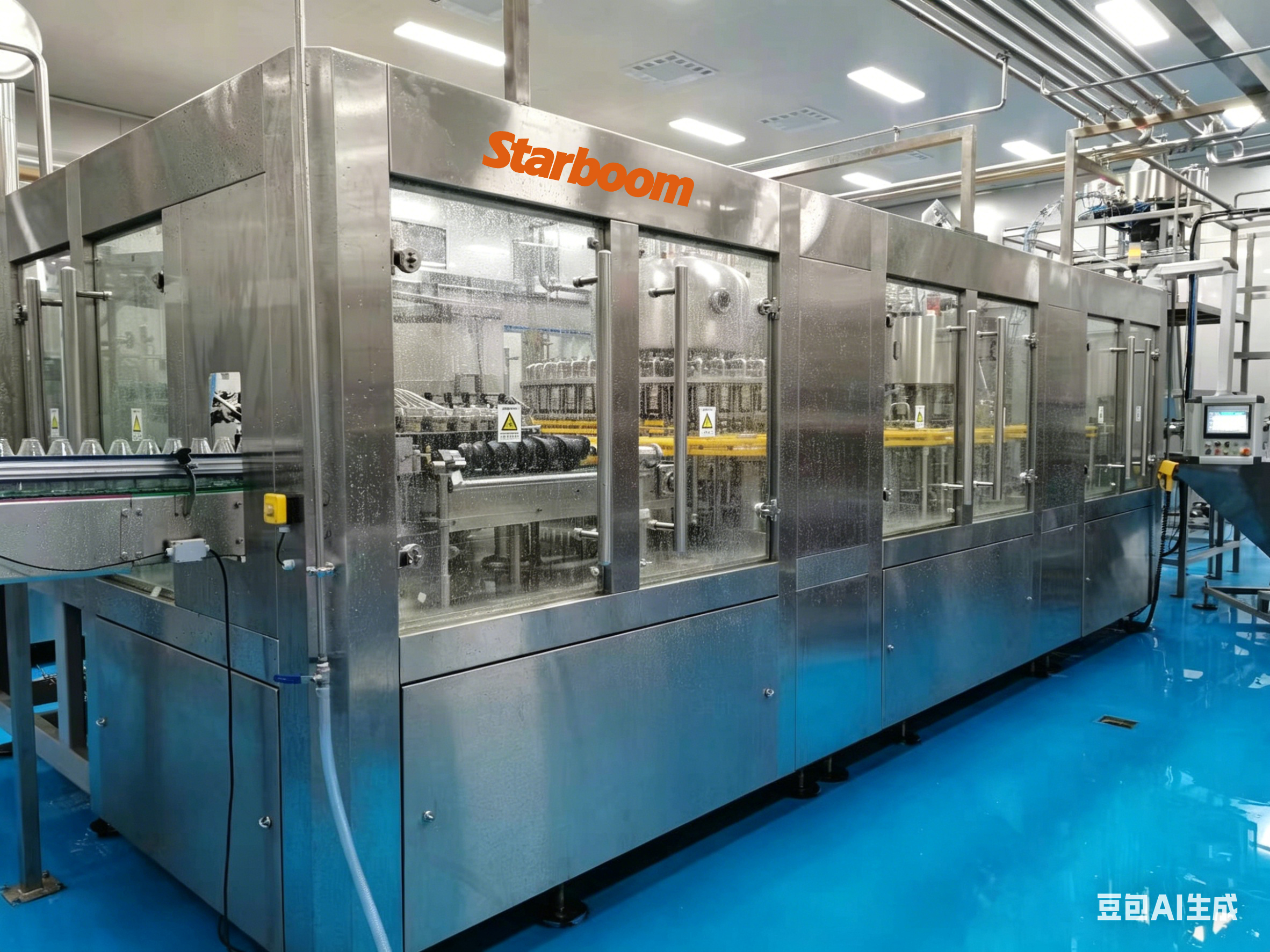

1.Glass bottle feeding mechanism
- a) The glass bottle feeding method adopts screw feeding method.
- b) Increase the anti-bottle detection mechanism, once the anti-bottle appears, the anti-bottle cannot go through, and provide an alarm signal.
- 2.Rinsing part
1)The bottle clamp and the sliding sleeve of the lifting mechanism are made of German IGUS corrosion resistant and maintenance-free bearings.
2)Single cycle rotary cleaning, not only to ensure the effective cleaning time, but also to save the amount of cleaning fluid.
3)The rotating disk is welded with stainless steel AISI304.
4)The bottle clamp is made of stainless steel AISI304, which is hygienic and durable.
5)The gripper equipped with high-efficient spray nozzle, it can develop to any position of inwall of the bottle, and can save rinsing water. There is a cover above the spray nozzle which can prevent water spilling; and there are regulatory recycle slot and recycle pipes under the nozzles.
6)Specially designed bottle clamp, designed separately for specific bottle mouth, clamping stability, no broken bottle.
7)Preheating water preparation for glass bottle rinsing
3.Piston Filter for Pulp/Jelly/Particle/Poping Boba
1) The filling column piston valve structure allows adjustment of different filling volumes through the position of the piston lift cam. The filling valve seat uses a non-contact filling method with the bottle mouth, effectively preventing secondary contamination.
2) The filling machine has the function of not opening the valve without a bottle. It has a feedback signal for bottle detection to control the opening and closing of the valve mechanism, achieving the opening and closing of the valve.
3) The filling valve structure is simple and easy to clean. It can withstand acid, alkali cleaning solutions and 120℃ high temperatures, with a long service life. The filling valve port adopts our patented slow-flow device, which can effectively prevent material foaming and overflow.
4) The filling machine is equipped with a CIP cleaning function. The cleaning of the material pipelines can be carried out online, as well as the cleaning of the filling valves. It is recommended to use manual cleaning methods.
5) The filling machine is equipped with a hydraulic cylinder and has temperature and level sensors, which can monitor the condition of the material in the hydraulic cylinder in real time.
6) All the rotating discs are made of stainless steel AISI304. The supporting bearings are large flat toothed ball bearings, which operate smoothly and reliably.
4.Hot Filler for Liquid
1)The structure of the filling valve is well-designed, with fast flow rate and high precision. All components are processed by CNC and machining center equipment. While improving processing accuracy, it also ensures good interchangeability of the parts. All sealing components of the filling valve are equipped with ozone-resistant and corrosion-resistant sealing rings. All parts in contact with the logistics are made of hygienic materials.
2)The filling valve and the sliding sleeve of the bottle lifting mechanism are all equipped with German igus corrosion-resistant and maintenance-free bearings.
3)Through the overall lifting device of the filling machine, the liquid level height can be adjusted within a limited range.
4) The filling machine is equipped with a CIP cleaning function. The cleaning of the material pipelines can be carried out online, as well as the cleaning of the filling valves.
5)Hot Filling Valve
- a) Structural Description
This component is specifically designed for hot filling. The entire valve assembly 4 is connected to the material distributor through holes and threads. The material transportation is connected to component 6 via a hose. During filling, the PET bottle mouth is sequentially pushed upward by components 15, 14, 13, 11, and 7. The material passage opens, and filling begins. The gas inside the bottle is discharged from the side gap on the inner wall of valve core 4 through 6 via the return liquid hose. The valve continues to fill, and the gas continues to be discharged. After the filling is completed, the valve body rises and leaves the bottle mouth. The valve core is reset by the action of spring 10. The material passage is closed, and feeding stops. Sealing rings are used in all possible areas that may be connected to the outside in this component. If there is material leakage during production, please first consider whether the sealing element is damaged.
b)Characteristics of the hot filling valve:
The filling method is gravity filling.
High speed and high precision liquid level and flow rate, reaching 120ml/s, with a liquid level accuracy of ≤±2mm.
Each filling valve is equipped with 1 return gas channel. After the logistics is filled, it returns to the logistics return filling tank.
The filling valve is equipped with a cleaning cup, which can perform a thorough CIP cycle cleaning of the filling valve.
5.Aluminum Cap Capping Unit and Cap Unscrambler
The aluminum caps capping machine consists of the machine frame, caps storage bin, frame components, bottle cap lifting device, reverse caps recovery system, and blow cap air path system, caps guide rail and capping heads .After the bottle caps are poured into the cap storage bin, they are lifted and transported, completing cap sealing, positive caps lifting, and then entering the screwing (pressing) machine through the blow cap system.
The reverse caps will freely fall into the bin when it is full. When there is a cap blockage in the cap passage, the positive caps will be blown back into the lid storage bin through the return blow mechanism.
The entire system process is automatically controlled. When the cap storage bin is full or empty, or the caps passage is full or empty, it will be displayed through corresponding detection switches (power off, proximity signal), achieving automatic operation.
The cap sorting system mainly adopts a linear belt cap conveying device to achieve cap sorting.
The lifting conveyor belt is equipped with transverse baffles for carrying bottle caps. Furthermore, a section of the lifting conveyor belt has a matching relationship between its inclination angle and the baffles as follows:
The center of gravity of an inverted cap in this section lies outside the baffle, while that of an upright cap lies inside the baffle.
By utilizing the characteristic that the center of gravity of a bottle cap does not coincide with its geometric center, inverted caps fall out of the baffles under their own gravity in the aforementioned section of the lifting conveyor belt, and return freely to the hopper, there by completing cap sorting.
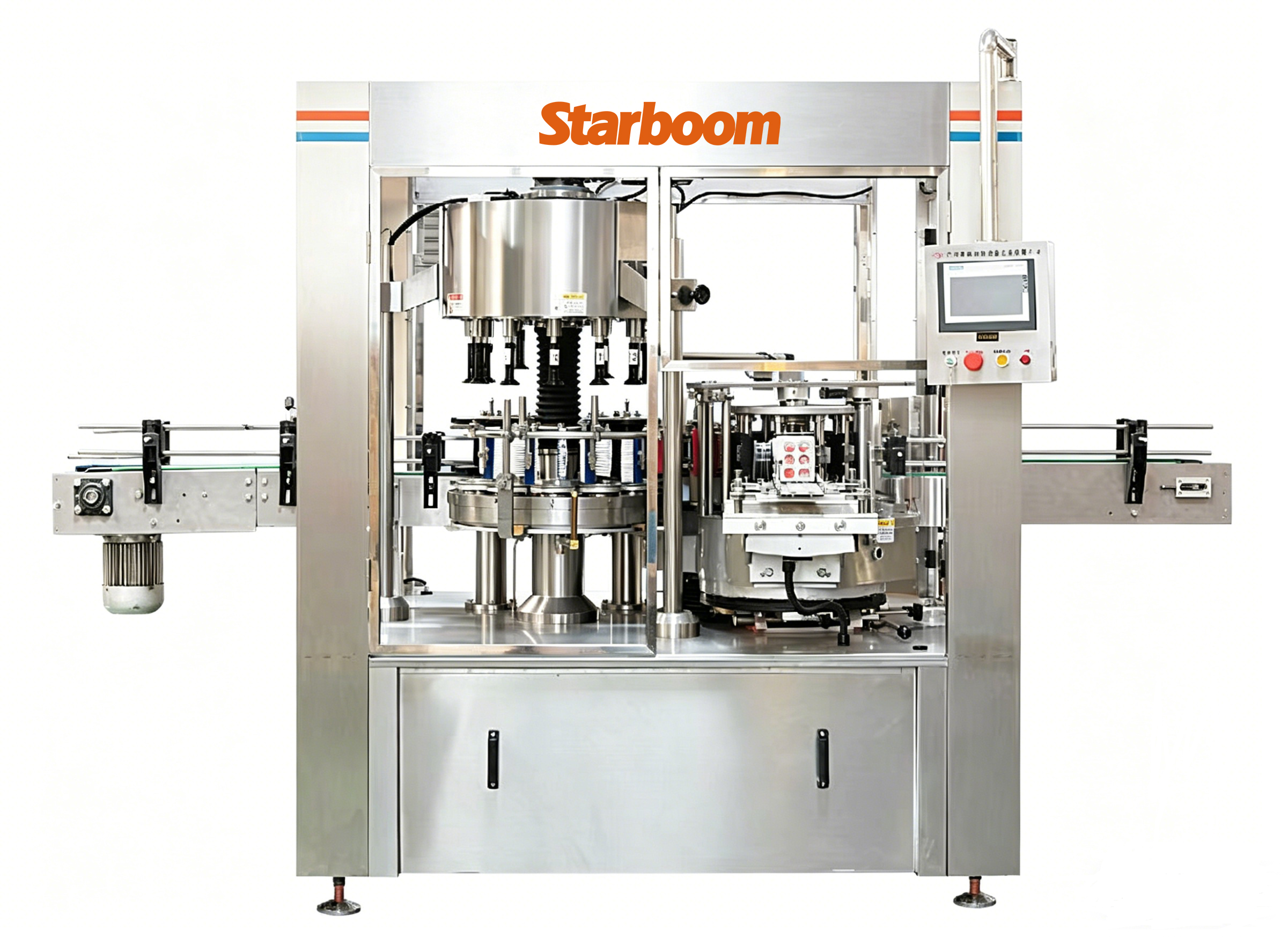
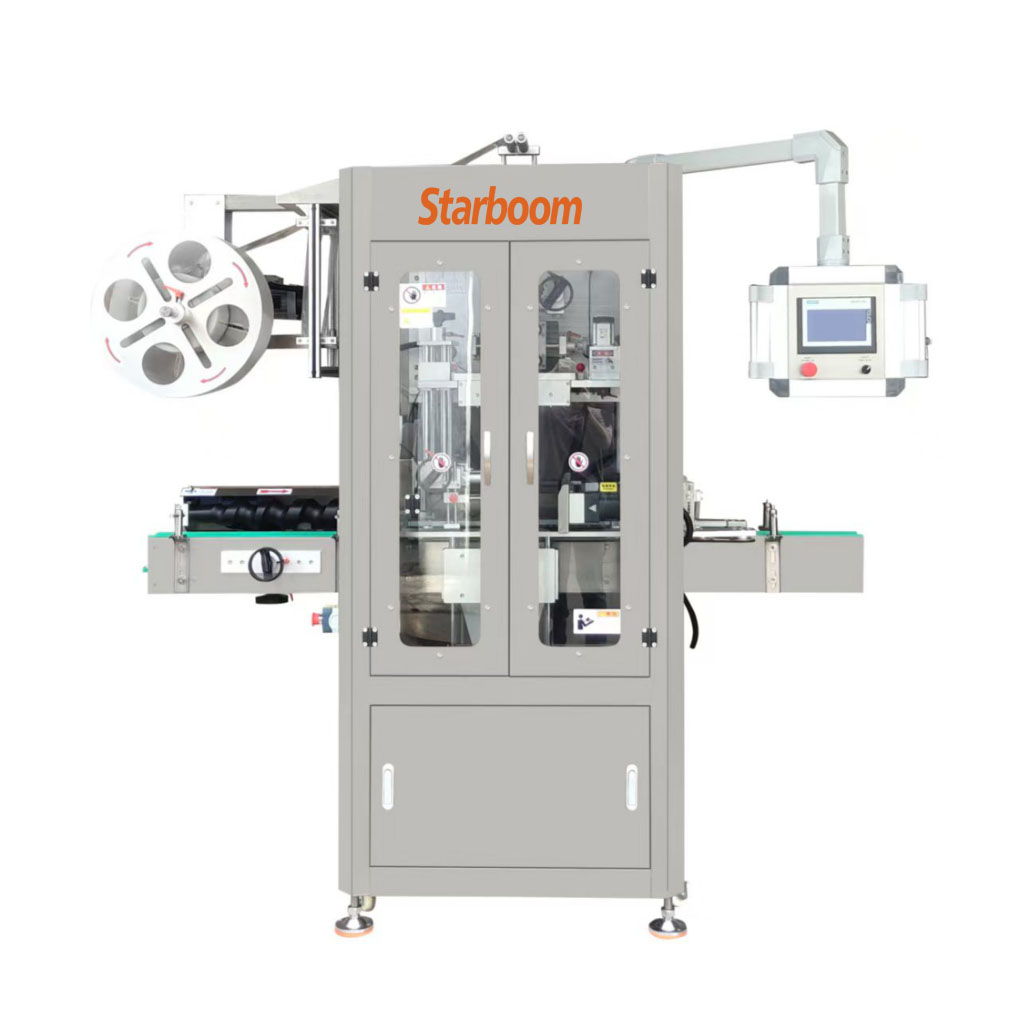
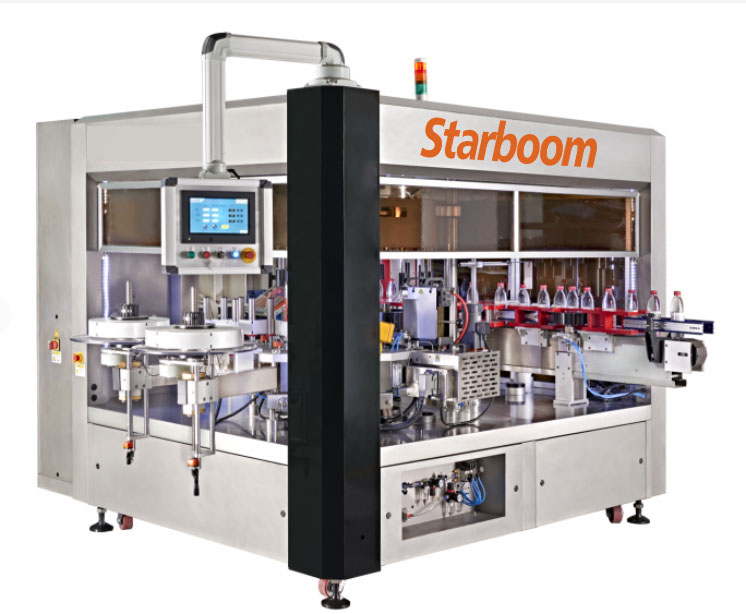
This machine consists of a bottle conveyor belt, a bottle inlet spiral assembly, a bottle inlet/outlet star wheel assembly, a label table (including a glue roller device, glue application and label picking device, label clamping drum, and label box device), a bottle pressing turntable device, a brush device, a bottle support turntable, a glue pump, a label release switch, a compressed air system, quick pneumatic connectors and air pipe connectors, a machine base, and a main drive and operating device.
The glue roller device applies glue evenly, the label box device picks up the label evenly, and the label clamping drum delivers the label evenly.
(3) Labeling Principle
Bottles are fed into the bottle-holding turntable via the bottle-separating screw and the bottle-feeding star wheel from the conveyor belt. The bottle-holding turntable consists of a turntable and a set number of trays mounted on it. The entire bottle-holding turntable is driven by a large gear under the main shaft. The bottle-holding turntable rotates at high speed under sufficient power from the main shaft. When the bottle enters the labeling station, the label is accurately affixed to the bottle body through the label plate and the label-clamping drum. After labeling, the bottle rotates on its own axis while revolving with the turntable, completing the entire labeling process.
- 6. Product Advanced Features
⑴ Variable frequency circuit; the main gearbox uses an integrated motor design for smoother power delivery and easier speed changes.
⑵ Stainless steel cladding for the labeling machine frame and panel; stainless steel support for the machine, meeting hygiene requirements for production of corrosive products.
⑶ Waterproof design for the labeling machine’s rotary table; strong anti-permeability. The tray can be independently disassembled for easy maintenance.
⑷ Reasonably designed bottle type replacement parts for quick and easy assembly/disassembly.
⑸ Multi-directional adjustable labeling station housing to accommodate various bottle types and labels.
⑹ Newly designed labeling station cover ensures stable operation of the label plate shaft and glue roller, guaranteeing better labeling results.
⑺ Newly designed glue roller assembly; the glue scraper automatically adjusts the glue thickness according to actual conditions, effectively saving glue and ensuring optimal label application.
⑻ Reasonably designed label box assembly for easy assembly and disassembly; threaded guide rods allow for fine-tuning of the label box, making label height adjustment simple and quick.
⑼ It has multiple detection functions, enabling label removal without bottles and ensuring no waste of label paper.
- Synchronization Requirements for Product and Conveying System Connection:
⑴ The labeling machine does not have its own conveyor chain or conveyor belt power. The labeling machine is integrated into the user’s production line, and the user’s own conveyor chain passes through the labeling machine. A signal is output from the labeling machine’s frequency converter to the power supply for the section of the conveyor belt passing through the labeling machine to achieve synchronous control of the conveyor belt speed and the labeling machine’s operating speed.
⑵ The conveying systems before and after the labeling machine must maintain sufficient bottle storage capacity to ensure stable operation of the labeling machine. The conveying system between the labeling machine and the preceding process equipment must be at least 6 meters long, and there should be no compression between bottles.
⑶ The conveying system connected to the labeling machine should use a motor with a power of 1.1KW~1.5KW without mechanical speed regulation. This conveying power is controlled by the labeling machine’s frequency converter to achieve synchronization between the conveyor speed and the labeling machine speed.